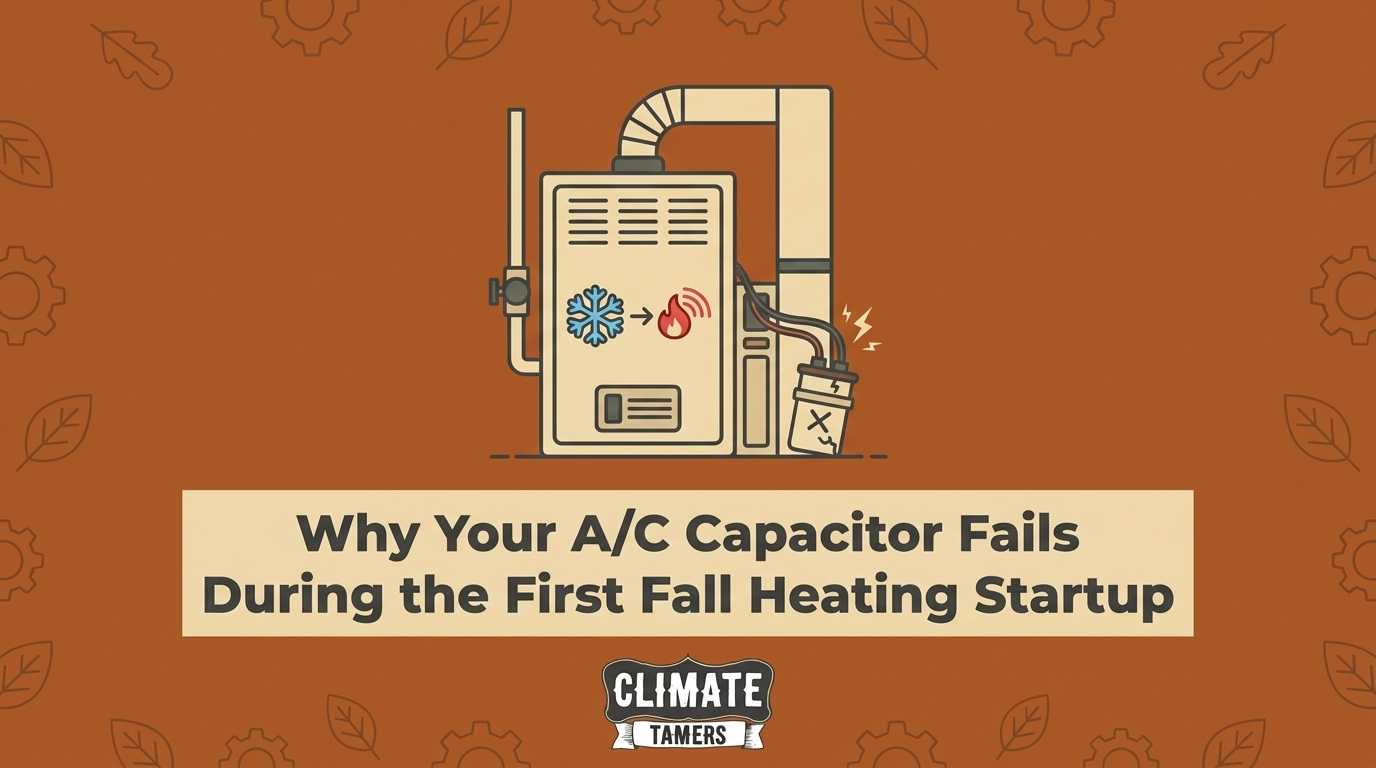
Why Your A/C Capacitor Fails During the First Fall Heating Startup
Smelling burning dust on the first cold night? Review these home maintenance tips and troubleshooting facts to decide when to call a pro for fall heating.


July peak summer is just around the corner, and your air conditioner is about to face the most demanding conditions of the year. When the temperature spikes and your system suddenly starts blowing warm air, short-cycling, or shutting down completely, you need reliable ac repair to restore your home's comfort. The extreme combination of high heat and intense ambient humidity places an immense, continuous load on every mechanical and electrical component inside your cooling equipment. While many homeowners assume that sudden breakdowns are completely random, our team at Climate Tamers knows the reality is that most mid-summer failures follow a predictable pattern of accumulating strain.
Understanding how your cooling equipment operates under pressure helps you make informed decisions before a minor hiccup turns into a major expense. Properly maintaining your HVAC system before the worst of the heatwave hits is the best defense, but knowing exactly when to call for professional air conditioning repair services can prevent those early warning signs from cascading into catastrophic compressor failures.
During the hottest weeks of the year, your air conditioner rarely gets a chance to rest. The constant demand means that parts which normally have time to cool down between cycles are forced to run hot for hours on end. In our experience servicing Metairie homes, this sustained operational stress is the primary reason why so many cooling systems fail precisely when you need them the most. By recognizing the environmental factors at play, you can take steps to protect your equipment.
To understand why air conditioners struggle so much in Metairie LA, you have to look at the science of cooling in a subtropical climate, something our technicians navigate daily. An air conditioner does not actually "create" cold air; rather, it removes heat and moisture from the indoor air and transfers it outside. This workload is divided into two distinct categories: sensible heat and latent heat.
• Sensible Heat — What It Controls: The actual temperature of the air (what you read on the thermostat). — Impact on Your System: Requires steady airflow and refrigerant circulation to lower the room temperature.
• Latent Heat — What It Controls: The amount of moisture or water vapor suspended in the air. — Impact on Your System: Forces the system to run longer cycles to condense and drain away heavy humidity.
In drier climates, an air conditioner spends most of its energy lowering the sensible heat. However, with Metairie's extreme Gulf Coast humidity, our technicians consistently see systems working significantly harder to remove the latent heat (moisture) before they can even begin to effectively lower the room temperature. This dual workload leads to nearly continuous operation during July peak summer days. Because the equipment is running non-stop to fight the heavy, damp air, the internal motors, belts, and electrical relays experience accelerated wear and tear.
Furthermore, there is a direct connection between poor indoor air quality and underlying mechanical strain. When an air conditioner is overwhelmed by high humidity, it struggles to filter and dehumidify the air effectively. This leaves the indoor environment feeling sticky and uncomfortable, which is often the first indicator we look for when a system is losing its battle against the climate.
Extracting airborne moisture consumes a massive amount of your system's total cooling capacity. As warm, damp indoor air blows over the icy evaporator coil, the moisture condenses into liquid water. If the air is exceptionally humid, the system spends a huge percentage of its energy just wringing that water out of the air. This hidden burden explains why high indoor humidity often precedes a mechanical failure; the system is running at maximum capacity for hours, generating excess internal heat that degrades electrical components over time.
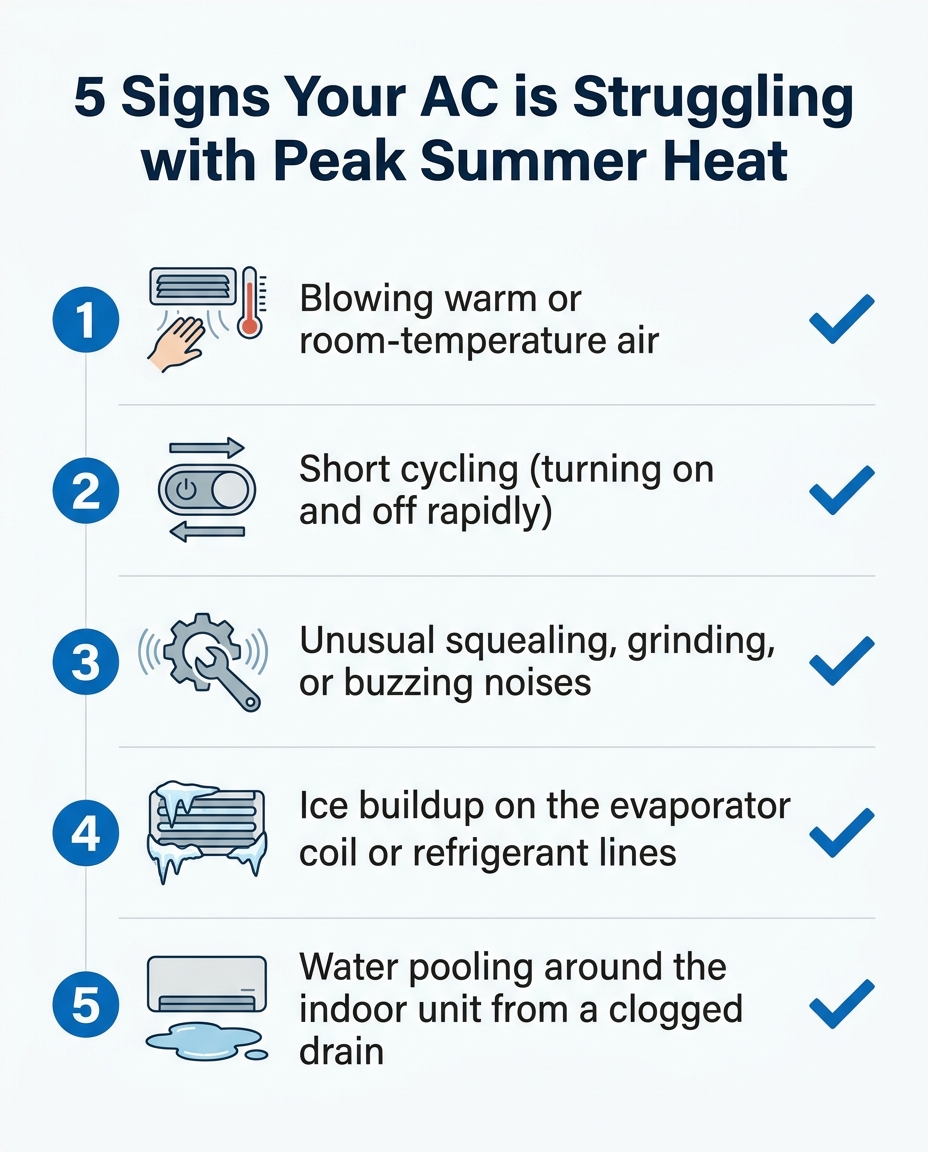
Recognizing the early symptoms of equipment strain can save you from a total system shutdown during the hottest part of July peak summer. Over our years of providing ac repair in the area, we've found that when an air conditioner is pushed beyond its limits, it usually gives several distinct warning signs before a major component breaks completely.
• Blowing warm air: If the air coming from your vents feels tepid or room-temperature, your system may be dealing with a refrigerant restriction, a failing compressor, or a frozen coil.
• Weak airflow: A noticeable drop in the volume of air blowing out of the registers often points to a failing blower motor or a severely restricted air filter that is suffocating the system.
• Short cycling: If the unit turns on for just a few minutes and then abruptly shuts off, only to turn right back on again, it is short cycling. This is highly damaging to the compressor and indicates a serious underlying issue.
If you notice any of these symptoms, the most important step you can take is to turn the system off at the thermostat. We cannot stress this enough: forcing a struggling air conditioner to keep running is the fastest way to cause a catastrophic compressor failure, turning a manageable repair into a complete system replacement.
Your ears are often the best diagnostic tool you have. Normal operational sounds include a steady hum from the outdoor unit and the smooth rush of air indoors. However, if you hear a grinding or squealing noise, it usually indicates a failing motor bearing or a slipping fan belt. A loud buzzing sound from the outdoor unit often points to a failing electrical component, like a contactor or a dual run capacitor. Catching these noises early can save major components from secondary damage. For example, if you notice a heat pump making noise, shutting it down and calling our professionals immediately prevents the internal damage from spreading to the most expensive parts of the system.
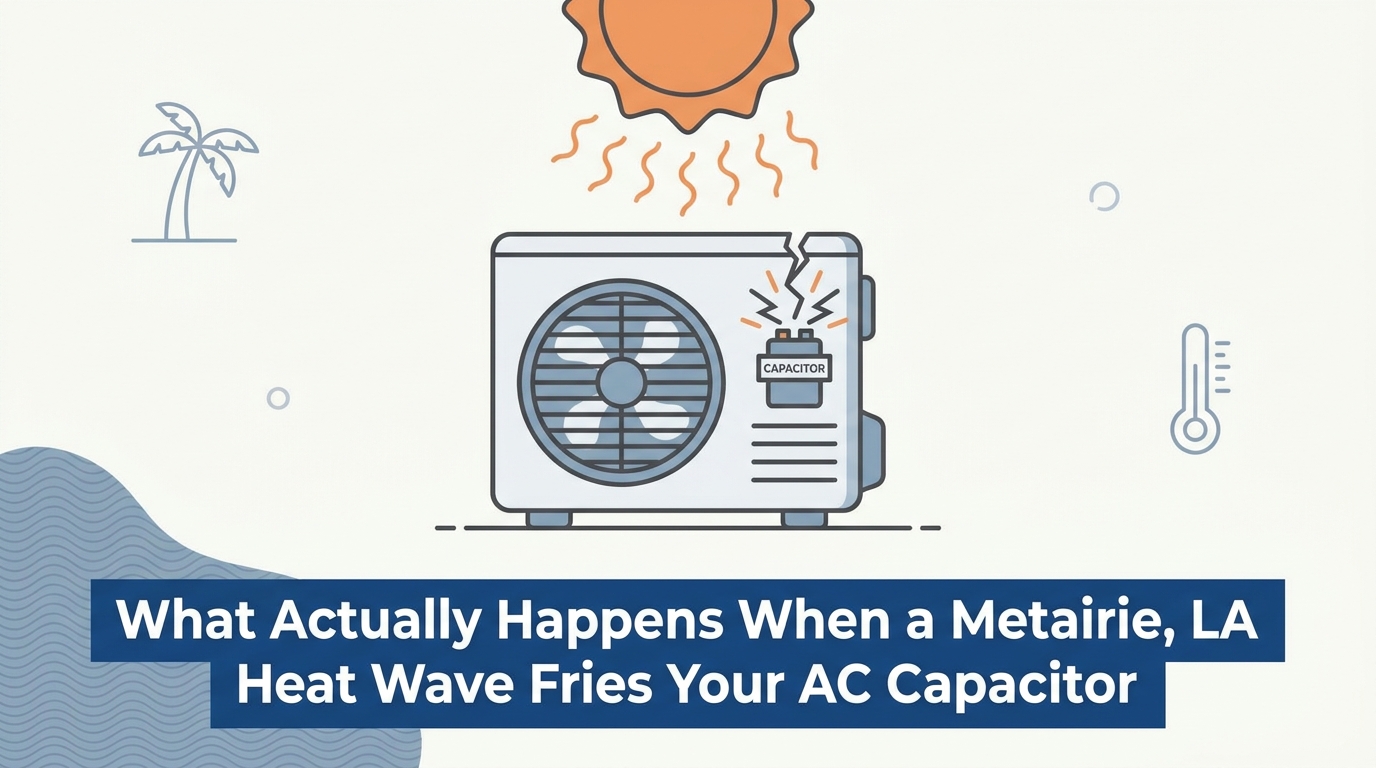
When the temperature in Metairie LA stays high for weeks on end, specific components within your air conditioning system bear the brunt of the load. The most common mid-summer failures our crews respond to involve the electrical parts that start and regulate the heavy motors. Capacitors, for instance, act like large batteries that deliver a jolt of electricity to start the compressor and fan motors. Because they store electrical energy, they generate their own heat. When you combine this internal heat with the blistering outdoor temperatures of July peak summer, capacitors are highly susceptible to thermal overload. They can bulge, leak, or simply lose their charge, leaving the system unable to turn on.
Contactors are another frequent failure point. These are mechanical switches that control the flow of high-voltage electricity to the compressor. The constant on-and-off cycling during a heatwave causes the electrical contacts to pit and burn. Eventually, they can fuse together or fail to connect at all.
Beyond electrical parts, dirty condenser coils are a massive liability in extreme heat. The outdoor coil is responsible for releasing the heat collected from inside your home. If it is caked in dust, dirt, or lawn clippings, it cannot transfer heat effectively. A dirty coil can reduce system efficiency by up to 30 percent, forcing the compressor to work harder, run hotter, and eventually burn out prematurely. This is why securing professional residential HVAC services to clean and inspect the outdoor unit is so valuable.
It sounds completely counterintuitive, but one of the most common summer problems we encounter is ice forming on the indoor air conditioning unit. Why do coils freeze when it is incredibly hot outside? The evaporator coil relies on a constant flow of warm indoor air blowing across it to keep the internal refrigerant from dropping below freezing. If that airflow is restricted—usually by a severely clogged air filter, blocked return vents, or a failing blower motor—the coil gets too cold. The heavy ambient moisture in the air then freezes directly onto the metal fins. Refrigerant leaks can also cause the pressure inside the coil to drop, leading to the same freezing effect. Once ice forms, it blocks airflow entirely, creating a cascading effect that puts immense strain on the outdoor compressor.
Because Metairie's subtropical climate produces significantly more condensate than average, managing that water is a critical summer priority. As your air conditioner extracts latent heat (moisture) from the indoor air, that moisture condenses into liquid water on the cold evaporator coil. During a humid July peak summer day, a standard residential cooling system can easily pull several gallons of water out of the air.
This massive amount of moisture creates a constant flow of water through the condensate drain pan and the PVC drain line that routes the water outside. Unfortunately, this damp, dark, and cool environment is the perfect breeding ground for algae, mold, and airborne debris. Over time, this biological growth forms a thick sludge that can completely block the narrow drain line.
When the line clogs, the water has nowhere to go. It backs up into the drain pan. Modern cooling systems are equipped with safety float switches designed to detect this rising water. When the float switch trips, it instantly shuts down the entire air conditioning system to prevent the pan from overflowing and causing severe water damage to your ceilings, floors, or drywall. Many homeowners panic when their system suddenly dies on a hot afternoon, assuming the compressor has failed. However, our technicians frequently arrive on these calls only to find out that a simple clogged drain pipe triggered the safety switch. Maintaining clear drainage is absolutely necessary for uninterrupted indoor humidity control and reliable cooling.
When your system fails and you call for help, you might wonder what the technician is actually doing during the service visit. A professional diagnostic process is not about guessing which part is broken; it is a systematic, step-by-step approach designed to isolate the exact problem and identify its root cause. Here is how our Climate Tamers team typically conducts a thorough evaluation during a July peak summer service call:
1. Electrical Assessment: The technician begins by testing the high-voltage and low-voltage electrical systems. Using a multimeter, they measure the electrical draw (amps) of the compressor and fan motors. If a motor is pulling too many amps, it indicates that the component is struggling against excessive mechanical resistance.
2. Airflow Verification: Next, they inspect the blower motor, the air filter, and the ductwork. Proper airflow is the foundation of the entire cooling process. The technician will measure the temperature drop—the difference in temperature between the air entering the return vent and the air blowing out of the supply registers—to ensure the system is transferring heat correctly.
3. Refrigerant Pressure Testing: If the electrical and airflow systems are functioning, the technician will attach digital gauges to the outdoor unit to read the refrigerant pressures and temperatures. This tells them exactly what is happening inside the sealed copper lines.
A comprehensive evaluation is necessary to find the root cause, not just the symptom. For example, if the system is low on refrigerant, simply adding more is a superficial "band-aid" repair. The refrigerant operates in a closed loop; if it is low, there is a leak that must be found and sealed. By utilizing reliable, efficiency-focused repair methods that prioritize long-term cooling performance over quick, temporary fixes, our professionals ensure that your equipment is truly ready to handle the rest of the season.
Transitioning from reactive repairs to proactive care is the most effective way to manage the extreme stress of summer operation in Metairie LA. Regular attention mitigates the heavy workload placed on your equipment, ensuring that it operates as efficiently as possible when the heat index climbs.
Routine cleaning is a major part of this protection. When the outdoor condenser coils are washed free of insulating dirt, the system can expel heat with far less effort. When the indoor condensate drain lines are flushed and treated, the risk of a sudden water backup and safety shutdown is virtually eliminated. We've found that these small, proactive steps drastically reduce the mechanical resistance that causes motors to overheat and fail.
Professional oversight keeps efficiency high and extends the overall lifespan of the equipment. A technician can spot a weakening capacitor or a fraying belt long before it breaks and leaves you stranded without air conditioning. By enrolling in a structured HVAC maintenance plan, you stay ahead of peak-season breakdowns, ensuring that your system is professionally calibrated, cleaned, and tested before the heaviest weather arrives.
Understanding the signs of mechanical strain is the very first step in protecting your home's comfort during the intense July peak summer heat. By recognizing the impact of high humidity, listening for unusual noises, and paying attention to airflow changes, you can catch problems early.
Never ignore minor issues that could easily evolve into major, expensive repairs. If your cooling equipment is struggling to keep the temperature down, or if you notice it running constantly without providing relief, it is time to seek professional diagnostics. Having the experts at Climate Tamers evaluate the system ensures that your home remains a cool, comfortable refuge, no matter how hot it gets outside.
Why is my AC running but not cooling?
When your system runs constantly but the house remains warm, it usually indicates a loss of cooling capacity. This can be caused by a refrigerant leak, a severely dirty condenser coil, or a clogged air filter restricting airflow. A professional evaluation from our team is needed to measure the refrigerant pressures and identify the specific point of failure.
What happens if my AC freezes up in the summer?
If ice forms on the indoor coil or outdoor refrigerant lines, the system will completely lose its ability to cool your home. You must turn the thermostat off immediately to allow the ice to melt and prevent catastrophic damage to the outdoor compressor. Freezing is typically caused by restricted airflow or a low refrigerant charge.
How do I know if my AC compressor is failing?
A failing compressor often gives warning signs before it dies completely. You might hear loud grinding, clanking, or hard-starting noises coming from the outdoor unit. Additionally, if the system trips the circuit breaker repeatedly or blows warm air despite the fan running, the compressor may be drawing too much electrical current and failing.
Can an older AC unit be repaired instead of replaced?
Yes, many issues on older units can be successfully repaired, especially if the problem is a failed electrical component like a capacitor, contactor, or fan motor. However, if the compressor itself has failed or if the system has multiple severe refrigerant leaks, replacing the aging unit might be a more reliable and efficient long-term solution.
Why does high humidity make my air conditioner work harder?
High indoor humidity forces your air conditioner to spend a massive amount of its energy extracting moisture (latent heat) from the air before it can effectively lower the room temperature (sensible heat). This dual workload requires the system to run much longer cycles, increasing the wear and tear on all moving parts.
How often should a condensate drain line be cleared in a humid climate?
In highly humid subtropical climates, the condensate drain line handles a massive volume of water and should be professionally cleared and treated at least once a year during routine maintenance. Flushing the line annually prevents algae and sludge buildup, which is the primary cause of drain pan overflows and system safety shutdowns.

Our customers consistently praise Climate Tamers for our professionalism, fast service, and commitment to keeping their homes comfortable.